Natural resources are essential for people's livelihoods. With increasing competition over land, water and other resources, we're working with marginalised communities so that governments and businesses respect these people's rights and share their benefit fairly.
Impact Stories
Myanmar - Our forest, our land
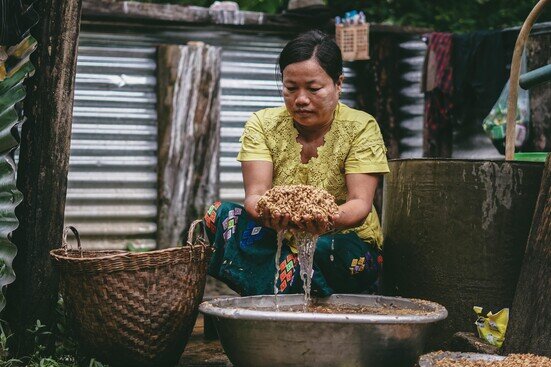
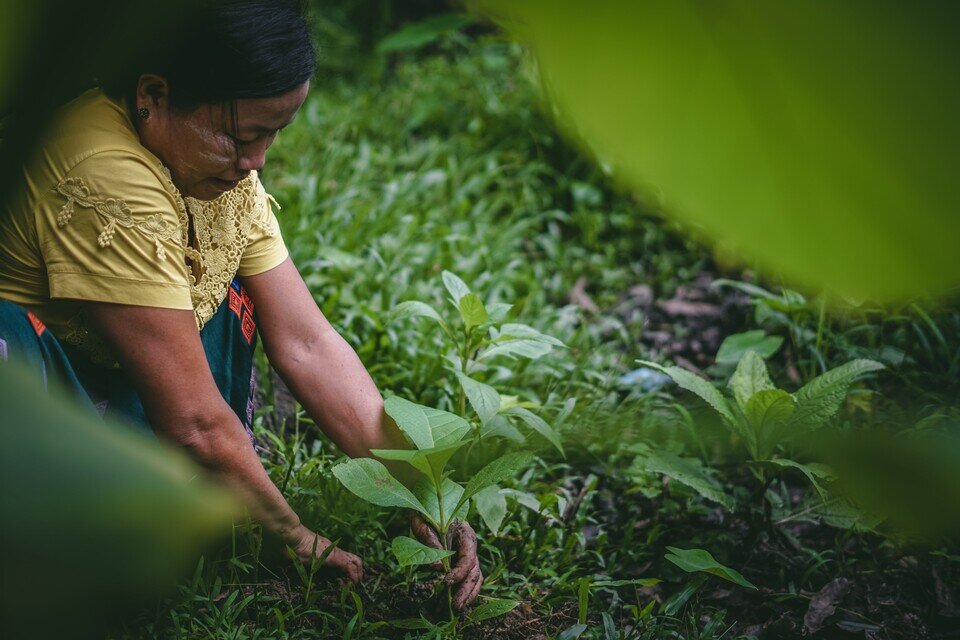
Caption: When most of your family’s income goes towards basic living expenses like rent, food and transportation, what do you do with the little you have left? Spend it on daily necessities? Your family members’ doctor’s visits? Your children’s education? These are questions many smallholder farmers who live in developing countries ask themselves every day. (Photo: Tommy Trenchard / Oxfam)
Since leaving her husband, Daw Khin Win Kyi has been heading her household of three. She relies on processing rice, picking fruit, mushrooms and nuts in the customary land she inherited from her parents to support her two daughters. Like many others though, her land has come under threat.
In recent years, thousands of acres of community forestland in Kachin and Shan States, and Palaung self-administered areas have been used by private companies, often foreign investors, to grow commercial crops like bananas, and rubber and oil palm trees. Villagers who are working on customary land, though, often aren’t aware of their land rights and how they can hold their government to account. Women have it worse as they’re rarely viewed as heads of households, which means it’s even more difficult for them to own land.
Since joining our Community Forest User Groups (CFUG) though, which we support through our partner Kachin Conservation Working Group, villagers like Daw Khin Win Kyi have seen their lives change.
Through the project, villagers learnt about sharing natural resources fairly and received the support they needed on the legal procedures required to secure their legal land rights. They now also collectively urge the local government to implement policies on sustainable community forestry. At the national level, we at Oxfam and our partners also lobby the government and private sector to change policies in areas like land and private investment.
Through this project, we especially provide women and women-headed households with low-interest loans, which Daw Khin Win Kyi says has been very helpful for her family’s survival. She used to take out high-interest loans to buy paddy for rice processing, but with these low-interest loans, she said, ‘I am raising pigs and saving money for my daughter to go to university and in the process of applying to get my customary land legally recognised through CF application. For the future of my two daughters, this is very helpful to get a better income and to improve the sustainability of our livelihoods through community forestry.’